Make a Home for Mugs and Spoons
Set up the cupboard and drawer for the way you make a drink, including the clean-up.
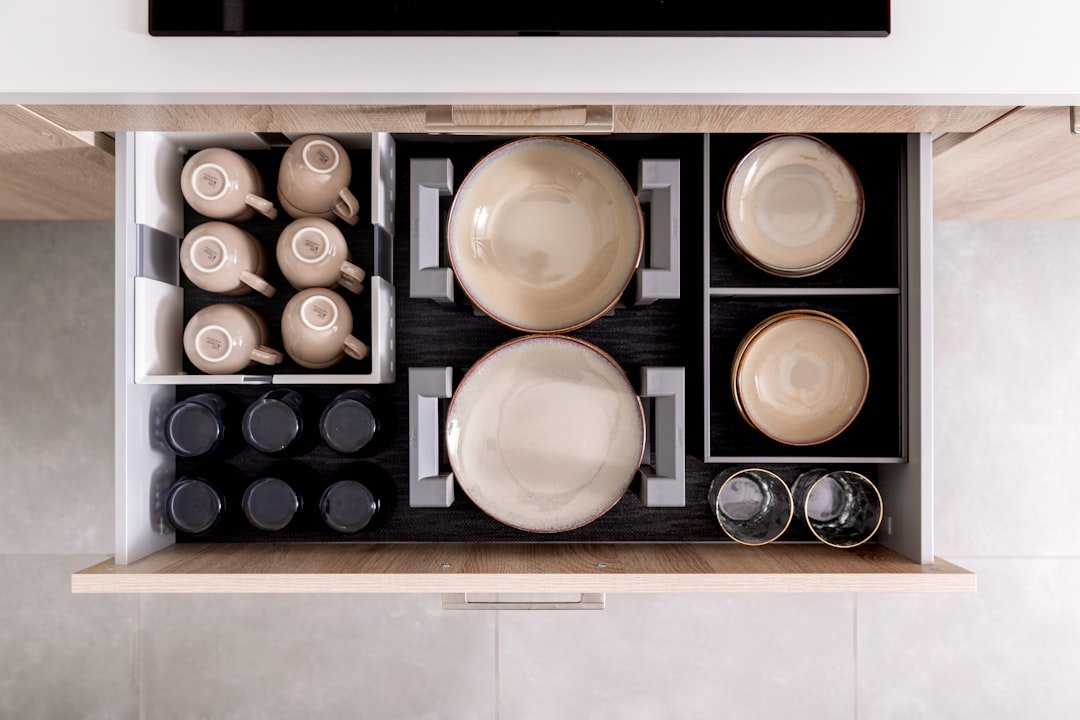
Follow the route from cupboard to sink
Make a drink without rearranging anything first. Notice whether you cross the kitchen for a spoon or lift a stack to get one mug. Solve the most frequent extra movement before worrying about matching containers.
Give handles room
Set the mugs you use most on the easiest shelf. Turn handles so one can be lifted without catching the next. Put taller or occasional mugs at the side; if they are too tall for the shelf, move them rather than balancing them in a stack.
Separate serving from washing
A spoon used for stirring should have a clear route to the sink, while dry spare spoons stay in a nearby drawer. If a mug returns to the counter instead of the cupboard, make sure its shelf is genuinely reachable with one hand.
Choose a layout for mugs with real handles
Take out the mugs used on a normal morning and put them on the shelf where you think they should live. Place the biggest one first. Leave room above it for your hand and enough distance from the door hinge for the handle to clear. Try lifting each mug without turning a stack or moving another cup. If the small espresso cups can go side by side but the large cups cannot, give the large ones a different row rather than squeezing all of them into one depth.
In a household that shares an early kitchen, keep the two most-used mugs next to each other near the front and leave a returning space between them. A person putting away dishes should be able to tell where a mug goes even when the cupboard is partly empty.
Move the spoon by one step, then test it
Make a drink once as usual. If you have to step around someone else to get a spoon, try a shallow section of the closest drawer that already holds dry utensils. If that drawer also houses cooking tools, put the teaspoon slot near its front rather than transferring the entire cutlery set. Try picking one up with the other hand occupied by a mug. If you always find yourself using a spoon from the draining rack, improve the return route from the sink instead of storing the clean spoons somewhere less accessible.
Leave just enough mugs for the usual interval between washes, plus whatever you genuinely use for guests. The occasional ones can stay higher up or at the end of the shelf. Recheck the shelf after a wash when every mug is present. If you still have to stack mugs to put the last one away, move a rarely used set before installing hooks or inserts. The arrangement should work when the kitchen is clean as well as when half its contents are in use.
Set aside a landing place for the second drink
In some kitchens the bottleneck only shows up when you make two drinks at once. Set out both mugs and see where the spare spoon and the finished mug sit. If one person has to move a hot drink to get a clean mug down, make a small open area beside the preparation spot rather than moving the mugs higher. Keep the worktop clear of things that can get knocked over. A useful arrangement still lets the next person open the cupboard and make a drink while yours sits at its own safe landing spot.